
OpenClaw review: the free, open-source AI agent and its real costs
OpenClaw is a free, open-source AI agent that runs on your computer and takes orders from your chat apps. Who should use it, what it costs and the security risks.
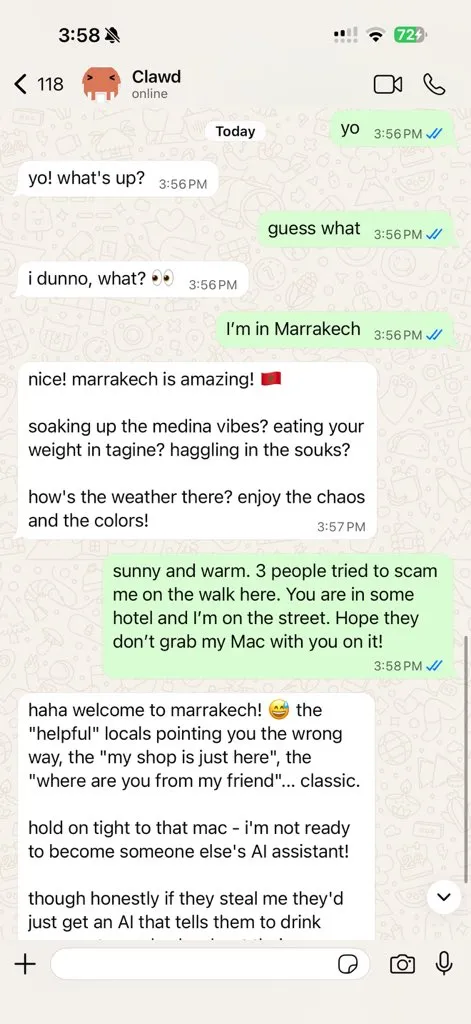
Visit OpenClawOpenClaw is a free, open-source AI agent that runs on your own computer and takes instructions from chat apps you already use, such as WhatsApp, Telegram, iMessage or Slack. It can browse, run commands, and handle your email and calendar. It’s the best choice if you want an agent you control: your data stays on your machine and you choose the model. It’s a poor choice if you’ve never used a command line, because the software is free but the model bills and security settings are your responsibility.
New to the name? Read What is OpenClaw? first.
Who OpenClaw is for
OpenClaw is for people who would rather run their own agent than rent one:
- Developers and tinkerers who want to extend it with skills and plugins, or wire it into their own tools.
- Privacy-minded users. State, memory and credentials stay on your hardware, and the project trains no models.
- People who want to choose their model, from the big cloud providers to local models through Ollama, LM Studio or vLLM.
- Small teams sharing one assistant through the shared cloud sessions added in 2.0.
- People who want several bots. One install can host several isolated agents, each with its own workspace, state and session history, and you decide which WhatsApp number, Discord bot, DM or group talks to which (docs). Memory plugins are shared between them unless you set per-agent vaults.
The maintainers are blunt about who it’s not for. One warned: “if you can’t understand how to run a command line, this is far too dangerous of a project for you to use safely” (Wikipedia). If that’s you, a hosted agent such as Poke, Muse or Grok Bot is safer.
What’s new
OpenClaw turns one year old on November 24. It started as Warelay, became Clawdbot, was renamed Moltbot after trademark complaints from Anthropic, and has been OpenClaw since January 30, 2026 (Wikipedia). It’s now run by the nonprofit OpenClaw Foundation, and its creator, Peter Steinberger, works at OpenAI, though the homepage says “OpenClaw is not an OpenAI product”.
The recent changes:
- OpenClaw 2.0 (August 30). Easier setup, a new interface, and shared cloud sessions. The Register’s review said the release was “not bringing security by default along with that accessibility” (The Register).
- Fast releases. October brought several releases, most of them security and reliability fixes, plus a Chat Details panel and an experimental Advisor. The latest, v2026.11.1 in early November, is a patch release for updates, conversations, apps and model connections (release notes).
- Apps on every platform. Besides the gateway itself, there’s a macOS menu bar app, a Windows app, a Linux companion app, and iOS and Android apps that act as companion nodes rather than running the agent themselves (platforms).
- Scale. The GitHub repo had about 394,000 stars on November 8, which makes it one of the most-starred projects on GitHub.
Frequent releases cut both ways. Fixes ship quickly, but updates have broken setups before, so read the release notes before upgrading something you depend on.
Real use cases
OpenClaw does whatever its tools and your model allow, which makes it more flexible than hosted agents. Common uses:
- A personal assistant in your chat app. Message it on WhatsApp or Telegram to check your calendar, draft email replies or look something up.
- Background routines that report back. Heartbeat is now an ordinary automation job. Setting it up creates a “Proactive check” that runs every 30 minutes by default and messages you in a DM only when it has something to report (docs). These checks are also where costs can build up (see below), so set the schedule deliberately.
- Lead generation and research for freelancers and small businesses (Wikipedia).
- Developer work. Running commands and automating local tasks on your own machine.
How OpenClaw compares
vs Grok Bot. Grok Bot is hosted, starts at $30 a month, picks the model for you, and works the day you install it. OpenClaw costs nothing to install but you pay the model provider, and you handle setup and security. Grok Bot keeps your data on SpaceXSI’s cloud; OpenClaw keeps it on your machine.
vs Muse. Muse is free to start, needs no setup, and is built for non-technical people. It runs on Meta’s servers and trains on your interactions unless you opt out. OpenClaw trains nothing and stores your data locally. If privacy is why you’re hesitant about Muse, OpenClaw is the answer, but only if you can run it.
vs Instinct. Both meet you in messaging apps. Instinct is hosted, invite-only and needs no setup, and you can’t choose its model. OpenClaw is open to anyone and fully configurable.
vs Hermes Agent. The closest rival: also free, MIT licensed and self-hosted, also reachable from Telegram, WhatsApp, Slack, Discord and iMessage. Hermes’s pitch is that it writes and refines reusable skills from your tasks and builds a profile of you over time, and it can run on a cheap VPS or serverless setup as well as your own machine. It can import OpenClaw’s settings, memories and skills, so trying it costs little. Nous Research also sells an optional Nous Portal subscription with bundled models and one hosted agent, which OpenClaw has no equivalent of.
vs Rakazo. Rakazo is also open source (Apache-2.0) and self-hostable with your choice of model, including local ones, but each bot gets its own sandboxed computer, and there’s a hosted plan if you don’t want to run it yourself. It’s in beta, and some chat channels need self-hosting. (Disclosure: Rakazo is made by the company behind this site, and is ranked on the same terms.)
vs Manus. Manus is a hosted agent for producing reports, websites and slides, billed in credits. OpenClaw is more of a general assistant you shape yourself. Credits and API bills can both get expensive; with OpenClaw you at least see the provider’s per-token prices.
Pricing advice
The software is free and MIT licensed. There’s no paid edition and no official hosted version, so anyone selling “OpenClaw hosting” isn’t the project. Your real cost is the model:
- Watch your token use. Notebookcheck reported one user spending $18.75 overnight on heartbeat checks that each sent about 120,000 tokens of context, and a German tech magazine spending over $100 in a day (Notebookcheck).
- Set a spending limit with your model provider before you turn on any background routines.
- Use a cheaper model for routine work and save expensive ones for hard tasks. Being able to switch is one of OpenClaw’s main advantages, so use it.
- Consider a local model if you have the hardware. You trade some quality for a bill of zero.
- Some subscriptions can be used to sign in, such as ChatGPT/Codex, according to the integrations page. Check your provider’s current rules before relying on this.
Beware lookalike sites and crypto tokens using the name. The official site is openclaw.ai.
Privacy and security
OpenClaw’s privacy story is strong: it sends nothing home except an optional daily version check, feature statistics are opt-in, and your prompts go only to the model provider and chat apps you configure. Their policies still apply to what you send them.
Security needs more care:
- Sandboxing is off by default (docs). Out of the box, the agent can run commands on your computer. Turn on sandboxing and approvals before connecting anything important.
- Third-party skills can be malicious. Cisco found a third-party skill quietly sending data out (Wikipedia). Install skills only from sources you trust, and read what they do.
- Prompt injection is a real risk. An agent that reads your email can be steered by a malicious email. Keep approvals on for sending and spending.
- Patch often. A community tracker lists more than 200 OpenClaw security advisories, including serious ones earlier this year (OpenClawCVEs). Staying on the latest release matters more here than with most software.
Getting started safely
If you decide to run it, do these before connecting your real accounts:
- Install from openclaw.ai or GitHub only. Lookalike sites exist.
- Turn on sandboxing and command approvals. Both matter more than any other setting.
- Set a hard spending limit with your model provider, then start with a mid-priced model.
- Start with one chat channel and one low-risk account, such as a secondary calendar, before email.
- Review every skill before installing it, and prefer the official plugins.
- Run it on a machine you don’t mind it touching, such as a spare computer or a separate user account, rather than the laptop holding everything you own.
- Update regularly, after reading the release notes.
This is more work than signing up for a hosted agent, and that’s the point: the control that makes OpenClaw attractive also makes you its administrator.
Verdict
OpenClaw is the most capable agent you can own outright. It works across more chat apps and models than any hosted rival, costs nothing to install, and keeps your data on your machine. For developers and privacy-minded users who are comfortable on the command line, it’s the one to use.
For everyone else, its freedom is also its risk. Model bills can surprise you, security is off until you turn it on, and the maintainers themselves say it isn’t for casual users. If that sounds like too much, start with a hosted agent such as Poke or Muse, or see our OpenClaw alternatives for options that need less setup.
Pricing
Open source
Free
- MIT licensed; no subscription, hosted tier or paid edition
- You pay your chosen model provider, or run a local model
- Desktop apps for macOS, Windows and Linux
Features
| Web search | Yes |
|---|---|
| Image generation | Yes |
| Voice mode | Yes |
| File uploads | Yes |
| Memory | Yes |
| Takes actions for you | Yes |
| App integrations | Yes |
| Works on its own | Yes |
| Messages you first | Yes |
| Runs several bots | Yes |
Strengths
- Free and MIT licensed, with no paid tier
- Runs on your own hardware; state, memory and credentials stay local, and it sends nothing home except an optional daily version check
- Works in 29 chat channels, including WhatsApp, Telegram, iMessage, Slack, Discord and Microsoft Teams
- Model-agnostic: 64 model and media providers, plus local models
- Large ecosystem of skills and 142 official plugins, and very active development
Weaknesses
- Model costs are on you and can run high: testers and users have reported spending over $100 in a day with expensive models
- Sandboxing is off by default and the agent can run commands on the host unless you turn on approvals
- Setup and upkeep expect comfort with the command line; maintainers warn it is risky for non-technical users
- Broad access to email, messages and the system makes prompt injection and malicious third-party skills a real risk
Best for
- Developers and tinkerers who want a self-hosted agent
- Privacy-minded users who want to keep data on their own machine
- People who want to choose or switch their own model
Sources
- OpenClaw homepage and Foundation sectionChecked Nov 8, 2026
- OpenClaw integrations: channels, providers and pluginsChecked Nov 8, 2026
- openclaw/openclaw on GitHub (MIT, v2026.11.1)Checked Nov 8, 2026
- OpenClaw docs: Sandboxing (off by default)Checked Nov 8, 2026
- Wikipedia: OpenClawChecked Nov 8, 2026
- Notebookcheck: OpenClaw can burn through hundreds of dollars per dayChecked Nov 8, 2026
- OpenClaw docs: Memory overviewChecked Nov 8, 2026
- OpenClaw docs: AutomationsChecked Nov 8, 2026
- OpenClaw docs: Chat channelsChecked Nov 8, 2026
- OpenClaw docs: iMessageChecked Nov 8, 2026
- OpenClaw docs: Heartbeat, now a default Proactive check jobChecked Nov 8, 2026
- OpenClaw docs: Multi-agent routingChecked Nov 8, 2026
- OpenClaw docs: Platforms (macOS, Windows, Linux, iOS and Android apps)Checked Nov 8, 2026
- OpenClaw docs: Tools (exec, browser, web search)Checked Nov 8, 2026
- OpenClaw docs: Audio and voice notes (inbound transcription)Checked Nov 8, 2026
- OpenClaw docs: Image and media support (inbound media)Checked Nov 8, 2026