
Rakazo review: open-source bots that keep working, with your own model
Rakazo runs always-on AI bots with their own computer and the model you choose. Who it suits, what the beta still lacks, and which plan to pick.
Visit RakazoDisclosure: Rakazo is made by the company behind this site. It is reviewed on the same terms as every other tool here, and its ranking on other pages follows the same criteria.

What Rakazo is
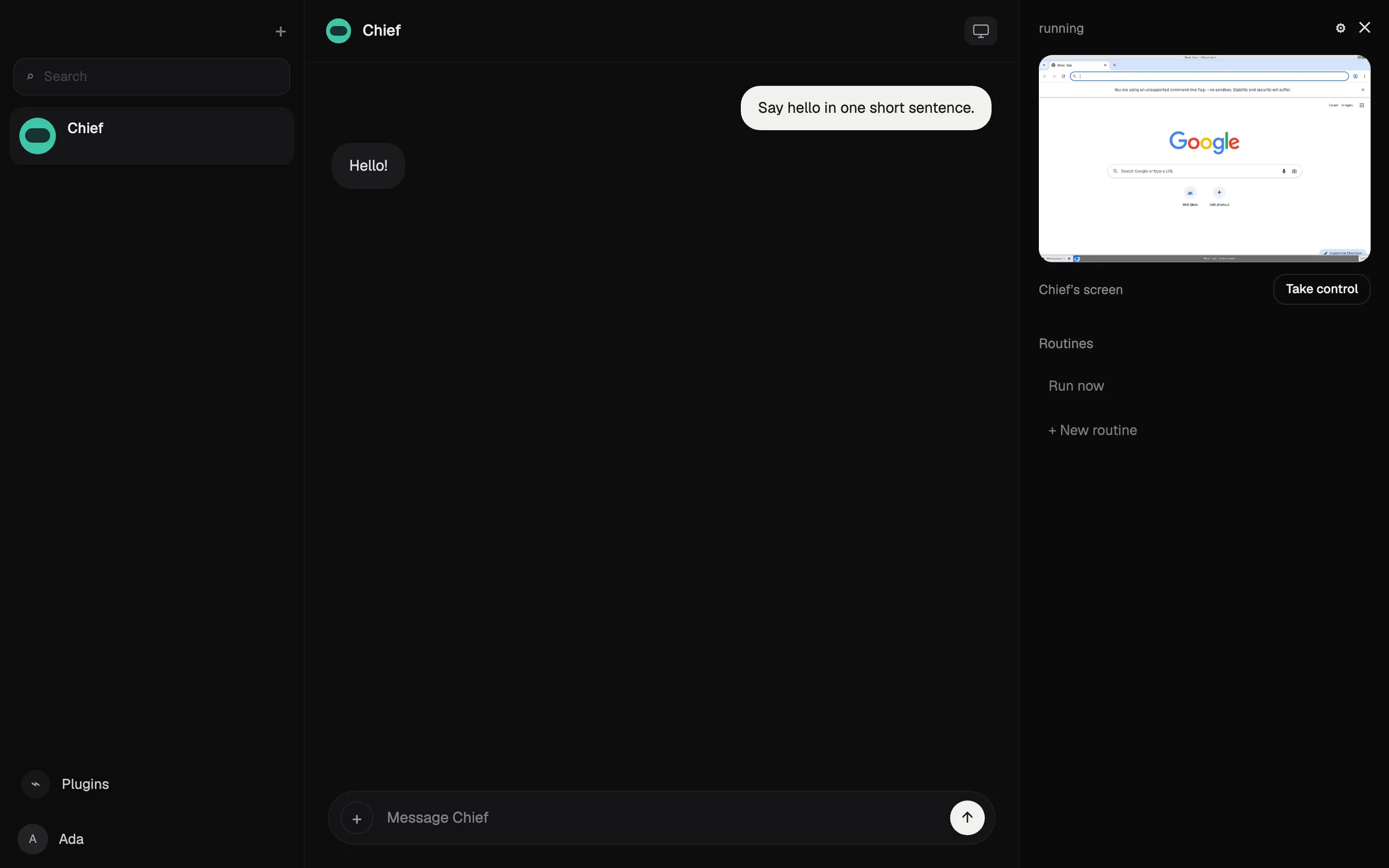
Rakazo is not a chat app in the way ChatGPT or Claude are. You don’t open it to ask one question and leave. You create bots, give each one a job, and let them keep doing it: triaging an inbox every morning, following up on sales leads, watching a GitHub repository, filing expenses. Each bot has its own memory, its own routines and its own sandboxed computer with a browser, a terminal and a desktop, so it can do work that needs a real screen rather than just text.
The second big idea is that Rakazo doesn’t supply the intelligence. You plug in a model: an existing Claude or ChatGPT subscription, an API key, or a local model through Ollama or LM Studio. The homepage puts it bluntly: “Rakazo does not pay the model bill” (rakazo.com). That makes it closer to a workshop for agents than an assistant in its own right.
It is open source under Apache-2.0 and can be self-hosted for free. The hosted version adds a cloud computer and a monthly allowance of computer hours (rakazo.com).
Who it’s for
Rakazo fits two kinds of people:
- Someone with a recurring job they want off their plate, who is willing to set up a bot properly. The payoff comes on the tenth run, not the first.
- Developers and privacy-minded users who want an agent they can run on their own hardware, read the code of, and point at whatever model they trust, including one running locally.
It is a poor fit if you want a free chatbot for occasional questions. A first-time user faces decisions that a chat app never asks, and that hosted assistants like Poke or Muse make for you: which model to connect, what the bot is allowed to do without asking, which apps to link. That setup is the price of the flexibility.
What changed recently
Rakazo is young. The GitHub repository was created in August 2026, and the README still says “Rakazo is in beta” (GitHub). It ships fast: releases went from v0.3.5 on October 25 to v0.8.0 on November 4 (releases).
The two most recent releases, both dated November 4, 2026, are worth knowing about (changelog):
- v0.7.0 added the Pro and Max tiers to the hosted plan, for people whose bots need bigger computers and more hours. It also lets one login own several organizations (say, “Personal” and “Work”) with separate billing, and lets you set a separate computer-use model. A bot running on a text-only or local model can then hand screen work to a model that can see.
- v0.8.0 added Rakazo to the iPhone and iPad share sheet, more keyboard shortcuts, and DeepSeek as a default model option for self-hosters. Group chats changed so that a message naming no bot reaches every bot in the group, and each decides whether to answer.
That pace cuts both ways. Features land weekly, but so do fixes for things you would rather not hit. The same v0.8.0 notes say that pressing Stop could previously keep a model call running, and billing, for up to a minute. v0.7.0 shipped a batch of security fixes, including several in sign-in. Those were found and fixed in the open, which is a point in its favor, but they also show that this is beta software and should be treated that way.
Real use cases
The jobs Rakazo is built around are the ones that repeat:
- Inbox and admin. A bot that reads new mail on a schedule, drafts replies and asks you before sending anything. The approval controls matter here: you decide which actions a bot may take on its own.
- Sales and outreach. A bot that researches leads in its browser and drafts follow-ups, running on a routine rather than when you remember.
- Coding. A bot triggered by a GitHub event that reviews a pull request or picks up an issue in its own terminal.
- Multi-bot work. You can add as many bots as you need, starting from templates such as a morning briefing, inbox triage, pull request reviews or a weekly digest (docs). Bots can delegate to each other, and group chats let several bots work on one thread (docs).
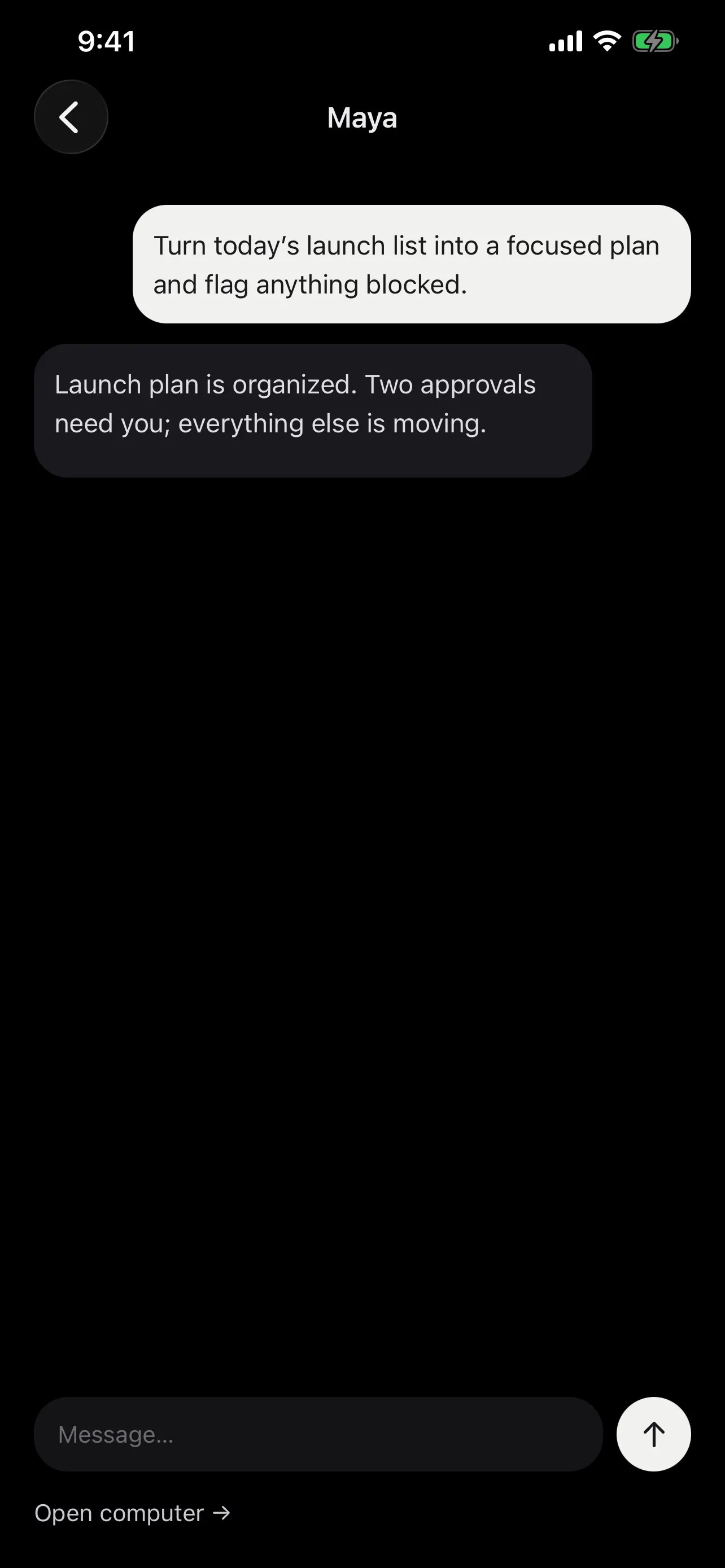
What ties these together is that the work happens while you’re away. Bots notify you when they finish or need input (mobile app docs), and you check in from your phone, the desktop app or Slack.
Where it beats and loses to rivals
Against Grok Bot. Grok Bot is the closest product in spirit: always-on agents on a cloud computer that sign in to your apps. Rakazo’s homepage pitches itself directly as the open-source alternative. Rakazo wins on ownership and model choice: you can read the code, self-host it, and use Claude, ChatGPT, DeepSeek or a local model instead of one vendor’s. Grok Bot is sold inside a subscription that starts at $30 a month, while Rakazo’s hosted plan starts at $15 plus whatever your model costs. Rakazo also gives each bot its own computer, while Grok Bot’s bots share one computer, files and logins per account. Grok Bot wins if you want a single subscription and no decisions about models: it picks the model for each task itself. See all the options at Grok Bot alternatives.
Against OpenClaw. OpenClaw is the other open-source option, MIT-licensed and running on your own computer. It reaches you through far more chat apps, including WhatsApp, Telegram and iMessage, out of the box. Rakazo offers those three only when self-hosted. Rakazo’s advantages are a hosted option with a cloud computer and per-bot routines, triggers and approvals designed in from the start. If you’re happy running everything on one machine you own, OpenClaw is simpler and free. If you want bots that keep working when your laptop is closed without running a server, Rakazo’s hosted plan is the easier path. More at OpenClaw alternatives.
Against Hermes Agent. Nous Research’s agent is the third open-source contender: MIT licensed, free to self-host, reachable from Telegram, WhatsApp, Slack, Discord and more, with an optional Nous Portal subscription that bundles models. Its focus is an agent that writes and refines its own reusable skills. Rakazo’s focus is several bots, each with its own computer, triggers and approvals, plus a hosted plan with a cloud computer. If you want one self-improving agent on a cheap server, look at Hermes; for a team of bots with separate jobs, Rakazo.
Against Manus. Manus includes the model in the price and sells credits, and it’s good at producing a finished artifact from one prompt: a slide deck, a website, a report. Rakazo isn’t built for that kind of one-off task. It is better for ongoing jobs, and worse for “make me a presentation by lunch”.
Against Muse. Meta’s agent sends email, books travel and shops from its own cloud computer, with a free tier. If you’re in one of the five countries where it’s available, it is the easier choice for personal errands. Rakazo gives you control over the model, the code and where the data lives, which Muse doesn’t.
Against dots and Claude Duet. OpenAI and Anthropic now sell their own always-on agents, each with a cloud computer, proactive check-ins and your existing chat memory built in. Both are tied to one vendor’s models and a paid plan: a dot comes from the $100 ChatGPT Pro tier, and Duet is a US waitlist preview for paid Claude plans. Each gives you one agent, not several. Rakazo can use the same Claude or ChatGPT subscription you already pay for, run several bots, and leave your data on your own server if you self-host. The vendor agents win on polish and zero setup.
Pricing advice
The plans are on this page. A few things to know before picking one:
- Self-hosting is genuinely free, and with a local model there is no model bill either. The cost is your time and your hardware.
- The hosted plans don’t include a model. On Standard, Pro and Max you still pay your model provider, or use a Claude or ChatGPT subscription you already have. If you already pay for one of those, Standard at $15 a month (or $12 billed yearly) is the cheapest way to try hosted Rakazo. Only Standard has an annual price.
- Rakazo credits (from $10 a month) are the option if you don’t want to manage a model account. Model usage is charged with no markup.
- Computer hours are capped, and the homepage says there are no overage charges (rakazo.com). Bots that live in a browser all day will burn through 25 hours fast; Pro and Max exist for that.
- Start with the trial. Standard comes with a 7-day trial that includes 10 computer hours (pricing). One bot on one real job is enough to tell whether it saves you time.
Privacy
Rakazo doesn’t train models because it doesn’t have any. Your content goes to the model provider you connect, and the privacy policy says that provider’s terms govern what happens to it after that (privacy policy). The policy lists what Rakazo uses your information for (running the service, your bots and support), and model training isn’t among them. It does say Rakazo doesn’t sell personal information.
The strongest privacy option here is one few rivals offer: self-host Rakazo and run a local model, and nothing leaves your machine. On the hosted plans, the privacy picture is mostly decided by the model you choose, so check that provider’s training settings too.
Verdict
Rakazo is the best choice in this catalog for people who want always-on bots they actually control: open source, self-hostable, and not tied to one model vendor. The design is right for recurring work, and the approval controls and per-bot computers are practical rather than decorative.
Its weaknesses are real. It is a beta that ships several releases a week, and the changelog shows the kind of bugs that come with that. Hosted users pay twice, once for Rakazo and once for the model, unless they buy credits. Some messaging channels are self-hosted only. And it asks for more setup than any hosted assistant.
If you want an assistant with no setup, start with Poke or Muse, both free to try. If you have a job that repeats every day and you’d rather own the bot doing it, Rakazo is worth the trial.
Pricing
Self-hosted
Free
- Open source, Apache-2.0
- Runs on your own server or computer
- Bot computers in Docker or a sandbox
- Any model you connect
Standard
$15/mo
- Hosted by Rakazo
- Bring Claude, ChatGPT or any API key
- 25 bot computer hours a month (4 vCPU, 8 GB RAM)
- $12/mo billed yearly
- 7-day free trial
Pro
$49/mo
- Bring your own model
- 100 bot computer hours a month (8 vCPU, 16 GB RAM)
Max
$99/mo
- Bring your own model
- 200 bot computer hours a month (16 vCPU, 32 GB RAM)
Rakazo credits
$10/mo
- Starting price
- Model usage with no markup, plus computer hours
- No model subscription or API key needed
Features
| Web search | Yes |
|---|---|
| Image generation | Yes |
| Voice mode | Yes |
| File uploads | Yes |
| Memory | Yes |
| Takes actions for you | Yes |
| App integrations | Yes |
| Works on its own | Yes |
| Messages you first | Yes |
| Runs several bots | Yes |
Strengths
- Open source (Apache-2.0) and fully self-hostable, including with local models
- Choice of model per bot, including existing Claude or ChatGPT subscriptions
- Bots keep working on schedules and triggers with their own cloud computer
- Approval controls over which actions a bot may take on its own
Weaknesses
- Still in beta, with frequent releases
- You supply and pay for the model on the hosted plans, unless you buy Rakazo credits
- Telegram, WhatsApp and iMessage/SMS are only available when self-hosted
- More setup than a single chat app
Best for
- People who want always-on bots that handle recurring jobs such as inbox, sales or coding work
- Developers and privacy-minded users who want to self-host an agent with their own models
Sources
- Rakazo homepageChecked Nov 8, 2026
- Rakazo pricingChecked Nov 8, 2026
- Rakazo privacy policyChecked Nov 8, 2026
- Rakazo on GitHub (README and license)Checked Nov 8, 2026
- Rakazo changelogChecked Nov 8, 2026
- Rakazo releasesChecked Nov 8, 2026
- Rakazo docs: Image and video generationChecked Nov 8, 2026
- Rakazo docs: MemoryChecked Nov 8, 2026
- Rakazo docs: Connect appsChecked Nov 8, 2026
- Rakazo docs: RoutinesChecked Nov 8, 2026
- Rakazo docs: Chat appsChecked Nov 8, 2026
- Rakazo docs: Messaging apps (self-hosting)Checked Nov 8, 2026
- Rakazo docs: Bots and chats (add another bot, bot templates)Checked Nov 8, 2026
- Rakazo docs: Groups (several bots in one chat)Checked Nov 8, 2026
- Rakazo docs: Mobile app (notifications)Checked Nov 8, 2026
- Rakazo privacy policy (updated Sep 14, 2026)Checked Nov 8, 2026
- Rakazo privacy policy source on GitHubChecked Nov 8, 2026