The best AI agent in 2026: assistants that do the work
Eight AI agents that work on their own computer and keep going while you're away, from Grok Bot and Manus to OpenAI's dots, ranked by reach, safety controls and access.
At a glance
| Assistant | Free plan | Open source | Self-hostable | Trains on your chats by default | ||
|---|---|---|---|---|---|---|
| Grok Bot | No | $30/mo | No | No | No | |
| Manus | Yes | $20/mo | No | No | Unknown | |
| Rakazo | Yes | $10/mo | Yes | Yes | No | |
| dots | No | $100/mo | No | No | Yes | |
| Perplexity Teammates | No | $200/mo | No | No | Yes | |
| Muse | Yes | $20/mo | No | No | Yes | |
| OpenClaw | Yes | – | Yes | Yes | No | |
| Hermes Agent | Yes | $20/mo | Yes | Yes | No |








Grok Bot is the most capable AI agent you can sign up for today: its Bots work on a cloud computer, run routines on schedules and events, and ask before sensitive actions. Manus is the best one to try for free, especially if you want a finished report, site or deck. Rakazo gives each bot its own sandboxed computer and lets you pick the model. If you already pay for ChatGPT Pro, dots is included.
Disclosure: Rakazo is made by the company that runs this site. It’s ranked on the same criteria as everything else, and its downsides are listed below.
An AI agent here means software that does a job on its own: it uses a browser or a full computer, signs in to your apps, starts work on a schedule or when something happens, and keeps going after you close the window. For assistants ranked on everyday reach, such as texting and morning briefs, see the best AI assistants.
How we ranked
We ranked from each product’s published plans, documentation and press coverage, as recorded in our catalog with sources. We didn’t run our own tests. The criteria, in order of weight:
- Its own computer. A browser, files or terminal where the agent works, so it can use sites without an integration and keep running when your device is off.
- Triggers. Whether work starts on a schedule or from an event, not only when you type.
- Safety controls. Approval before sensitive actions, and whether one agent’s mistakes stay contained.
- Can you use it today? Public sign-up, free plan or trial, countries and platforms.
- Cost you can predict. Published limits versus opaque pools or credits.
Agents act with your accounts and money, so safety counts for more here than on a list of chat apps.
This order is for agent work only, so it differs from our overall rating in the table on this page, which also weighs chat-app reach, running several bots, setup effort, price and availability.
1. Grok Bot: most capable agent you can sign up for
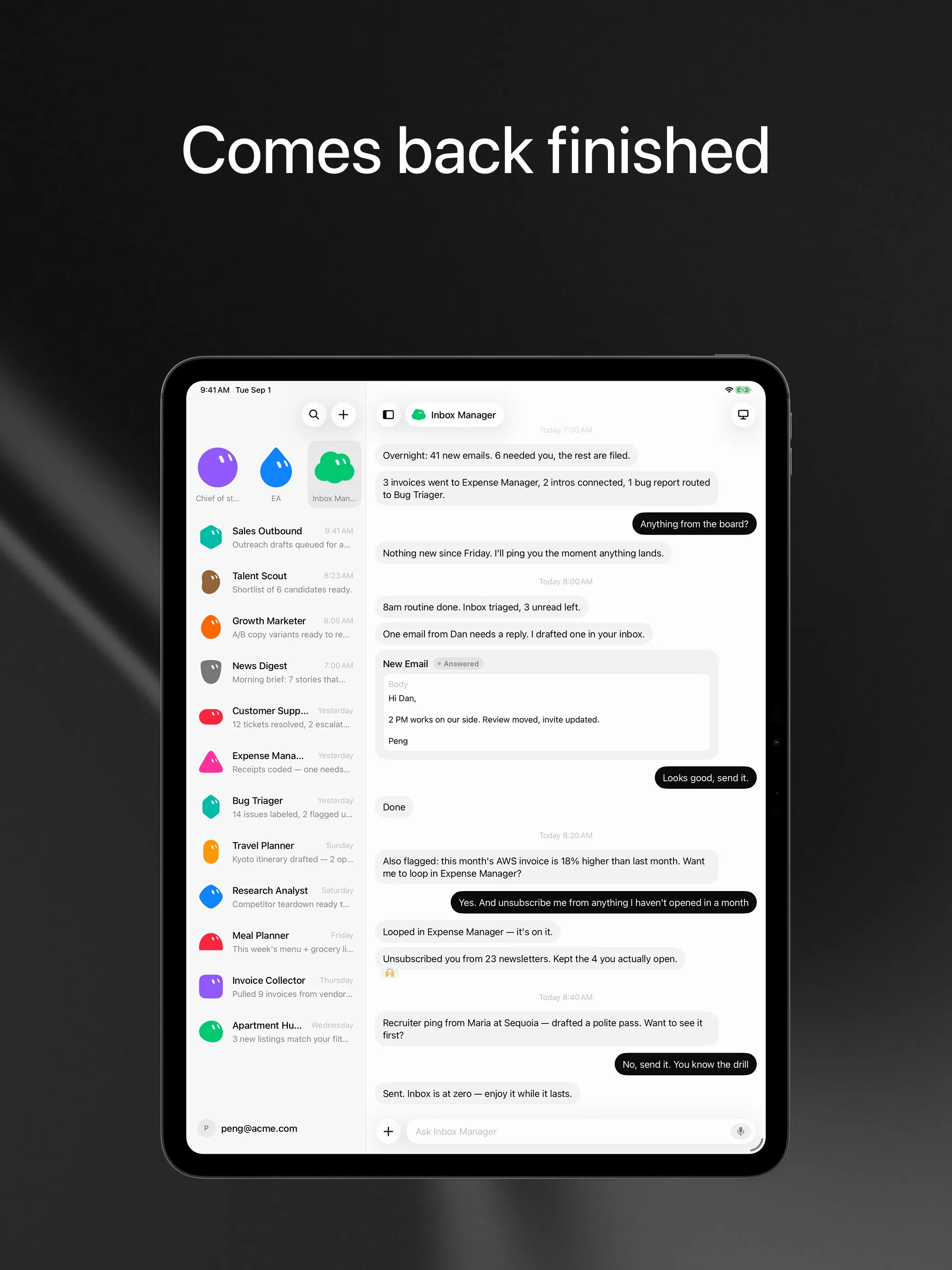
Grok Bot’s Bots work on a persistent cloud computer with a browser, files and a terminal, sign in to your tools, and run routines on a schedule or after an event (Grok Bot). A Bot can learn a task from a recorded demonstration of up to 10 minutes, several Bots can run in parallel and message each other, and they ask for approval before sensitive actions. It can also place phone calls to US businesses for you (Teslarati).
The weak spots are containment and cost. All Bots on an account share one computer, files and logins, and the docs say not to use separate Bots as a security boundary. There’s no free plan; it comes with X’s $30 Premium plan and up, and usage draws on a weekly pool whose size isn’t published. It’s in beta.
Pick it if you want to hand off recurring browser and inbox work. See what Grok Bot is and Grok Bot alternatives.
2. Manus: best agent to try for free
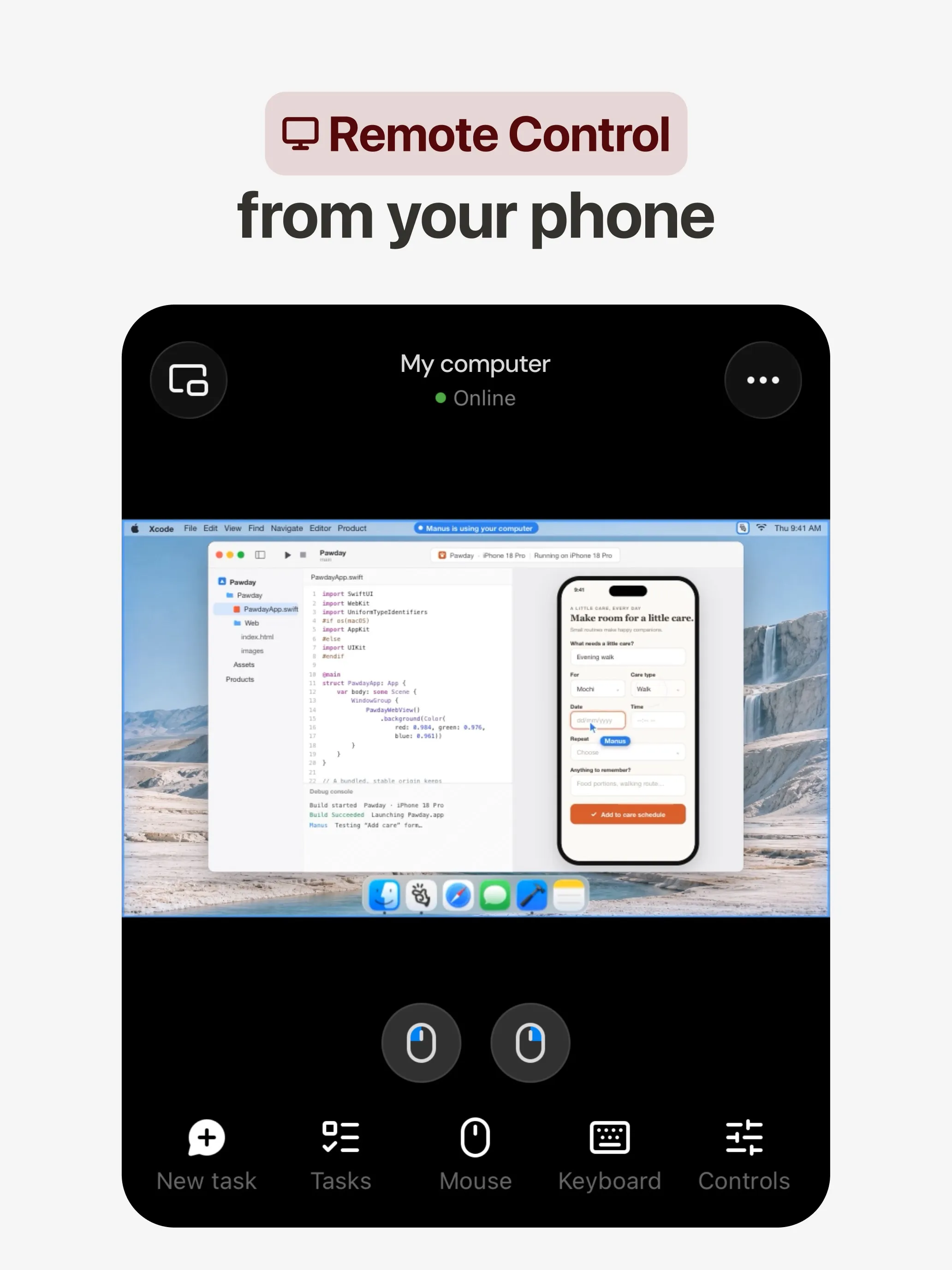
Manus plans and carries out a task in its own environment and hands back a finished result. Manus 2.0 added Cloud Computers and Automations that start on a schedule or from an event in Gmail, Slack or Notion (Manus). It has apps on web, iOS, Android, macOS and Windows, and you can also message it in Slack and Telegram.
The free plan gives 300 credits a day, capped at 1,500 a month, and only in Lite mode (Manus help). Credits are charged by task complexity, so you can’t know a job’s cost in advance, and failed runs still use them. We couldn’t confirm what approvals Manus asks for, so it ranks below Grok Bot on safety.
Pick it if you want a deliverable from a prompt and to start free. See Manus alternatives.
3. Rakazo: best for several isolated bots
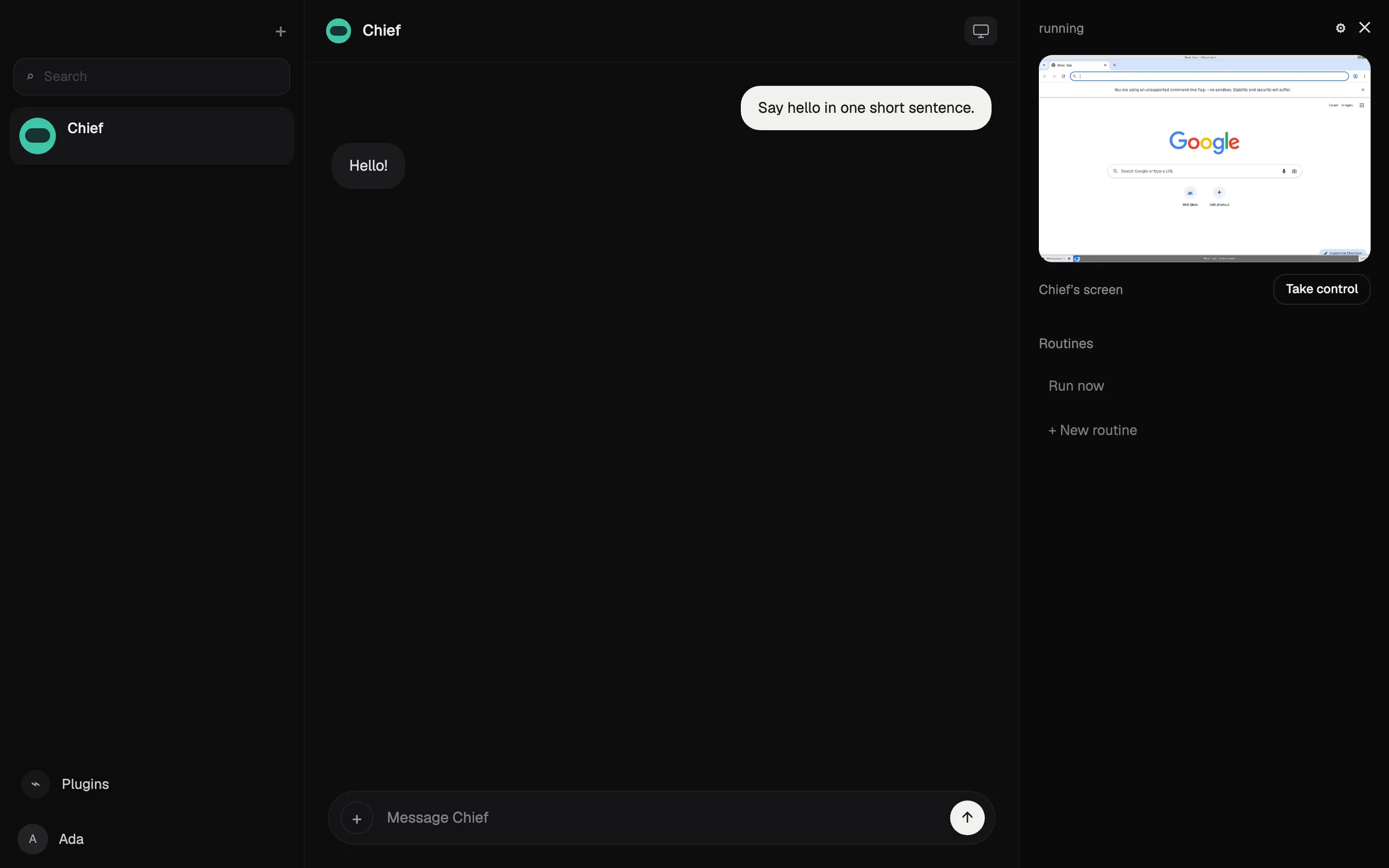
Each Rakazo bot has its own sandboxed computer with a browser, terminal and desktop, its own memory and routines, and starts work on a schedule, a webhook or a GitHub event (Rakazo). Bots can hand work to each other, and you choose which actions need your approval. Separate computers per bot is the containment Grok Bot’s docs say you don’t get there.
You bring the model (a Claude or ChatGPT subscription, an API key, or a local model) or buy Rakazo credits. It’s free to self-host under Apache-2.0, and hosted plans start at $15 a month with 25 computer hours (pricing). It ranks third because it’s newer and in beta, and paying the model separately makes the total cost less predictable than one subscription.
Pick it if you want several agents with separate computers and your choice of model.

4. dots: best if you’re on ChatGPT Pro
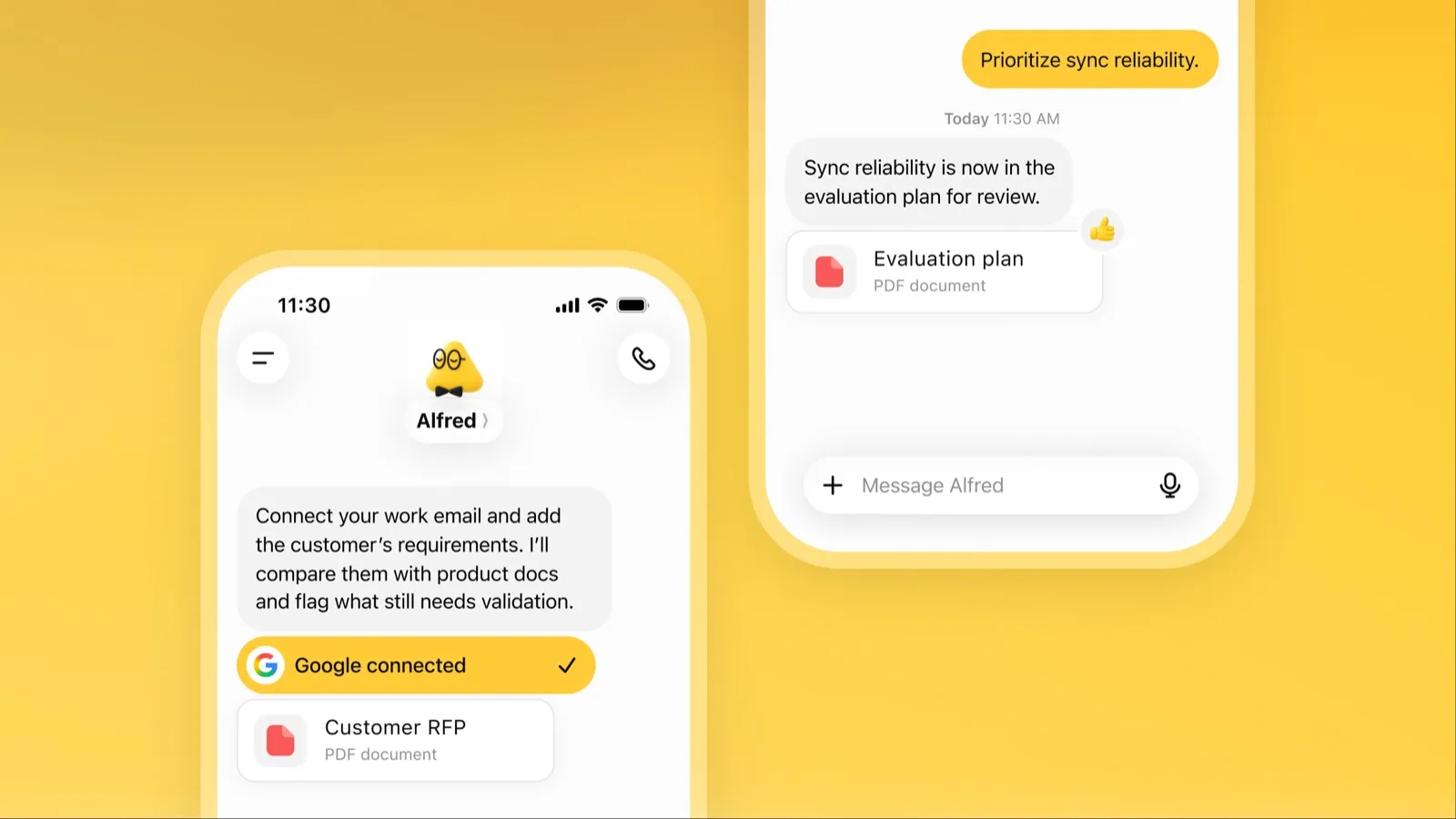
A dot works on its own cloud computer and browser, connects to over 4,000 apps through ChatGPT plugins, and hands work to Codex and ChatGPT Work (OpenAI). When idle it researches your connected apps read-only and comes back with things to review. Custom Rules and Auto-review gate sensitive actions, and OpenAI says some steps always stay with you.
It ranks fourth on access: it needs ChatGPT Pro from $100 a month or Business Premium, Pro access excludes the EEA, the UK and Switzerland, and you get one dot. Stopping a task doesn’t undo actions it already took (docs). See what dots is.
5. Perplexity Teammates: best for ongoing team projects
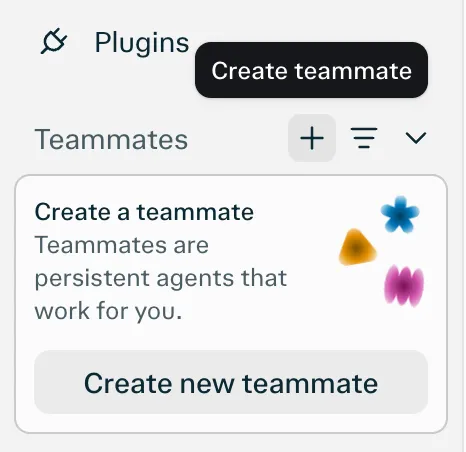
Each teammate runs on its own isolated computer and browser, splits goals into tasks run in parallel, watches Slack, GitHub, Linear and Gmail, and acts when something changes (Perplexity). You can take over a teammate’s desktop, it can’t view your saved credentials, and you pick the model per teammate.
It would rank higher on capability alone. It’s fifth because it’s a web-only research preview for Perplexity Max at $200 a month, and usage draws on credits with no published cost per task.
6. Muse: best agent for people who aren’t technical
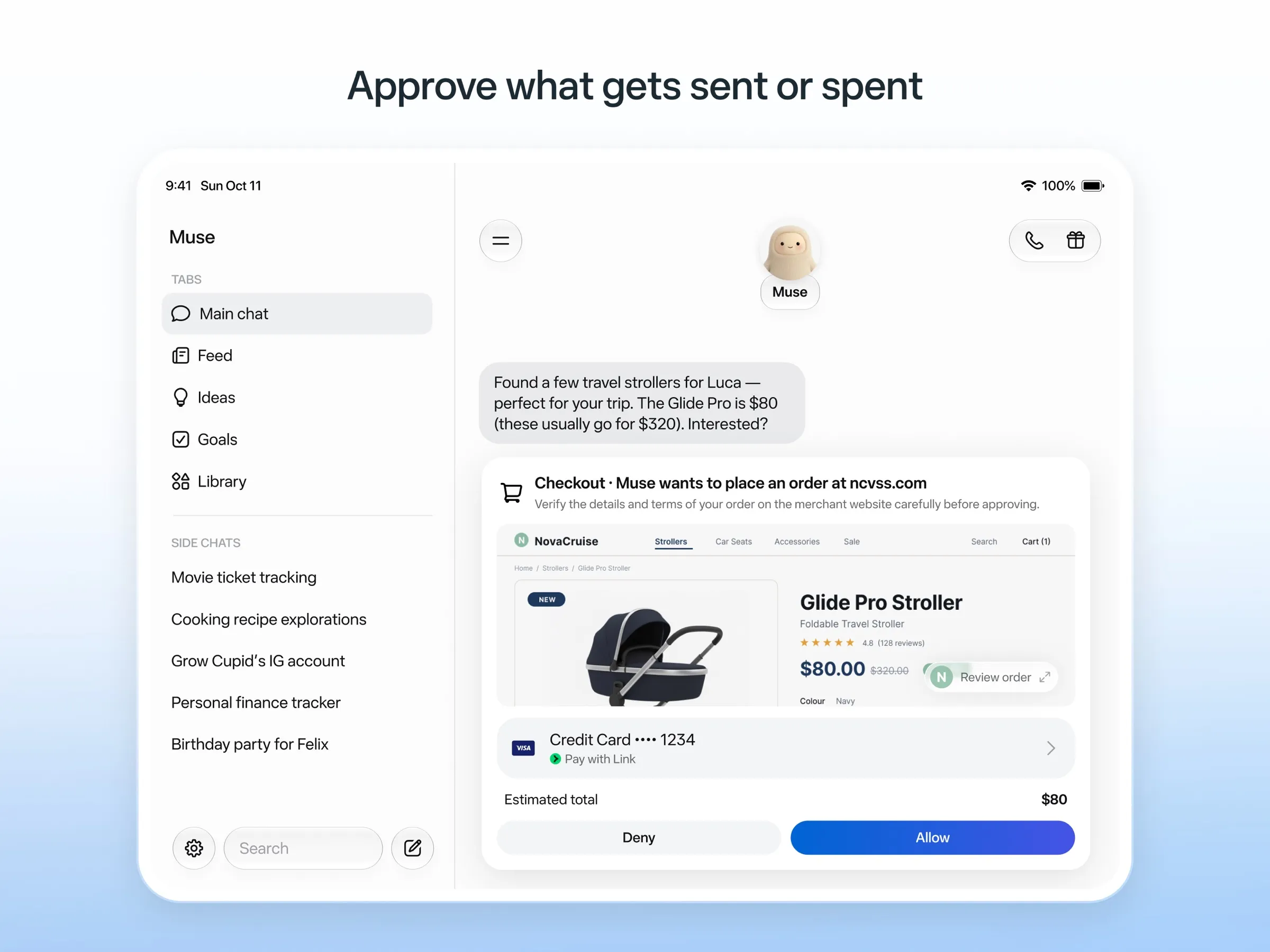
Muse works on a dedicated cloud computer where a separate Sentinel agent approves anything it sends to the internet. It asks before sending email or buying, keeps an audit trail, and pays with one-time card numbers (Meta). It can also handle reminders and scheduled tasks (Meta help). It’s free up to an unpublished limit.
Its safety design is the most detailed here, but early users and press reported it overstepping permissions, including reading messages it wasn’t meant to (The Guardian). It’s in five countries, needs a payment card even for the free tier, and trains on your chats unless you opt out. See what Muse is.
7. OpenClaw: best open-source agent
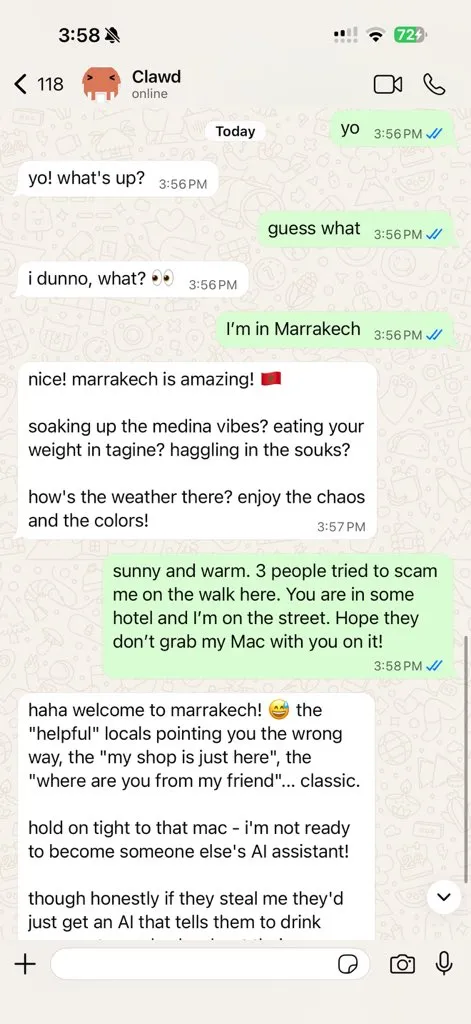
OpenClaw runs on your own computer, browses, runs commands, manages email and calendars, and runs scheduled automations (docs). It’s free under MIT and works with any model, including local ones.
It ranks seventh on this list because it works on your real machine, not a separate one, and sandboxing is off by default, so the agent can run commands on your computer unless you turn on approvals. Maintainers warn it’s risky for non-technical users. It ranks higher on our list of private assistants, where keeping data on your hardware matters most.
Pick it if you’re technical and will set up the sandbox. See OpenClaw alternatives.
8. Hermes Agent: best self-hosted agent for a server
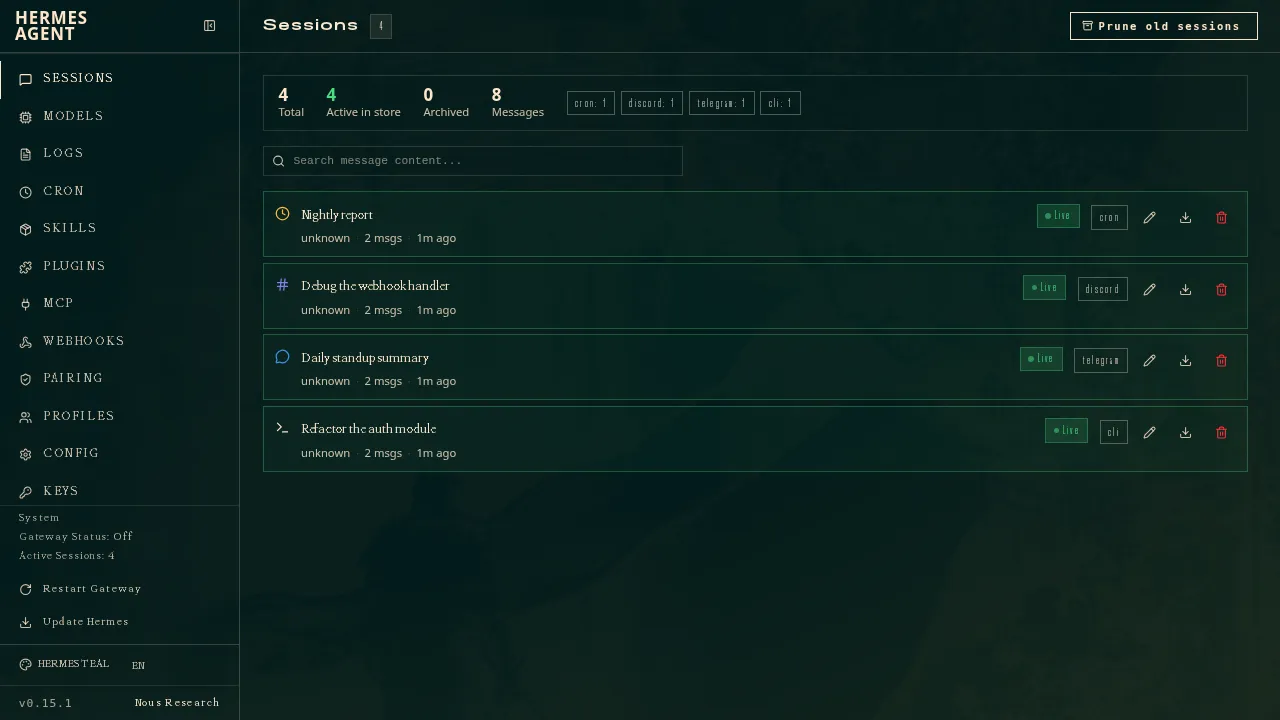
Hermes Agent runs on your computer, a cheap server or serverless infrastructure, writes reusable skills from what it does, and runs session heartbeats and scheduled jobs (docs). You can run several agents as profiles, each with its own model, memory and skills. An optional Nous Portal plan adds one hosted cloud agent (Hermes Agent).
It ranks last because setup expects the command line and your own server, and we couldn’t confirm its default safety controls from the docs we checked.
Pick it if you already run a server and want an agent that keeps learning.
Which one to pick
- Most capable, no setup: Grok Bot.
- Try one free and get a finished deliverable: Manus.
- Several agents kept apart, your own model: Rakazo.
- Already on ChatGPT Pro: dots.
- Perplexity Max subscriber with team projects: Perplexity Teammates.
- Everyday errands, not technical: Muse.
- Own the agent on your hardware: OpenClaw or Hermes Agent.
Start with tasks where a mistake is cheap, keep approvals on for email and purchases, and check what the agent did before letting it run unattended.
Best picks
$30/mo
Always-on AI agents from SpaceXSI that run on a shared cloud computer, sign in to your apps and finish multi-step work while you're away.
Visit Grok BotStrengths
- Bots work on their own cloud computer, so tasks keep running when your laptop or phone is closed
- Can operate websites and apps that have no API, using saved logins it never sees in plain text
- Several Bots can run in parallel, message each other and share one workspace
- Routines can run on a schedule or after an event, and a Bot can learn a task from a recorded demonstration of up to 10 minutes
- Can place phone calls to US businesses for you and send a summary afterwards
- Native apps for macOS, Windows, Linux, iOS and Android, plus Slack
Weaknesses
- No free plan and no standalone price: the cheapest way in is the $30/month Premium plan
- Usage comes from a weekly pool shared with Grok and Cursor, and SpaceXSI does not publish how much work that pool covers
- No model picker: Grok Bot chooses the model for each task and does not show which one it used
- All Bots on an account share one computer, files and logins; the docs say not to use separate Bots as a security boundary
- Users report Amazon blocks it from shopping as an unauthorized AI agent; Amazon hasn't commented
- Still labelled beta, with no browser version
$20/mo
General-purpose AI agent that researches, builds websites, slides, videos and games, and runs automations on its own cloud computer.
Visit ManusStrengths
- Turns one prompt into finished output: research reports, websites, slides, videos and playable games
- Automations can start from a schedule or an event in a connected service such as Gmail, Slack or Notion
- Video Editor and Game Dev let you edit what the agent made instead of regenerating it
- Free plan to try it, with apps for web, iOS, Android, macOS and Windows
Weaknesses
- Credit-based pricing makes costs hard to predict, and long or failed runs can use up credits
- Free daily credits are capped at 1,500 a month and only work in the Lite mode
- A built-in training opt-out is listed only for Team plans
- Several plans share the Pro name and differ only by credit amount
$10/mo
Open-source, self-hostable platform for persistent AI bots that each get a job, a computer, memory and routines, using the model you choose.
Visit RakazoStrengths
- Open source (Apache-2.0) and fully self-hostable, including with local models
- Choice of model per bot, including existing Claude or ChatGPT subscriptions
- Bots keep working on schedules and triggers with their own cloud computer
- Approval controls over which actions a bot may take on its own
Weaknesses
- Still in beta, with frequent releases
- You supply and pay for the model on the hosted plans, unless you buy Rakazo credits
- Telegram, WhatsApp and iMessage/SMS are only available when self-hosted
- More setup than a single chat app
$100/mo
OpenAI's always-on agent inside ChatGPT, with its own cloud computer, that works on your goals between chats and reaches you in ChatGPT, Slack or Teams.
Visit dotsStrengths
- Runs on its own cloud computer and browser and keeps working when your devices are off
- Connects to over 4,000 apps through ChatGPT plugins and can hand work to Codex and ChatGPT Work
- Reachable in ChatGPT, Slack and Microsoft Teams, and you can call it, with one memory across channels
- Researches your connected apps on its own and brings you finished work or decisions to review
- Custom Rules and Auto-review gate sensitive actions, and some steps always stay with you
Weaknesses
- No free, Go or Plus access: it needs ChatGPT Pro from $100 a month or Business Premium
- Pro access excludes the EEA, the UK and Switzerland
- One dot per user for now; teams of dots are only planned
- Texting over iMessage or RCS is a US-only beta, and your dot cannot call you yet
- Stopping a task does not undo actions it already took, and tasks it starts in Codex or ChatGPT Work count toward those limits
$200/mo
Persistent Perplexity agents, each with its own computer, browser and memory, that own ongoing work and watch Slack, GitHub and Linear. Max-only web preview.
Visit Perplexity TeammatesStrengths
- Run several teammates, each on its own isolated computer and browser with separate sessions
- Watches Slack, GitHub, Linear and other connected tools, acts on changes and reaches out when it needs you
- Pick the model per teammate or task, with Claude Opus 5.5 as the default
- Splits a goal into parallel agent tasks, and teammates in a Project share context and hand work to each other
- You can take over a teammate's desktop and steer it, and it can't view your saved credentials
Weaknesses
- Only on Perplexity Max at $200 a month; Pro and Enterprise plans are excluded by default
- Research preview whose behavior may change
- Web only for now; the iOS app is only promised soon
- Usage draws on credits, and parallel agents, large files and frequent automations use more
- No published cap on teammates and no published credit cost per task
$20/mo
Meta's personal AI agent that sends email, books travel and shops for you from its own cloud computer, in the Muse app or on the web.
Visit MuseStrengths
- Free tier, and no technical setup: you message it like a person in the app or on the web
- Runs on its own cloud computer and keeps working after you close the app
- Asks before sending email or buying, and shows an audit trail of what it did and plans to do
- Purchases go through a one-time card number with Link's purchase protections, so the agent never sees your real card
- Connects to email, calendar and Instagram, and can use a browser for sites without an API
Weaknesses
- Only in the US, Canada, Japan, Singapore and Mexico so far, and Meta says Muse is still in limited testing
- Requires a payment card even for the free tier, and the stronger Muse Wonder model is for paid plans only
- Your interactions train Meta's AI models unless you opt out
- Free usage limit is not published, so it is hard to know when you will hit it
- Early users and press reported it overstepping permissions, such as reading messages it was not meant to
- Requires a Meta account and asks for broad access to email, calendars and payments
Free, MIT-licensed personal AI agent that runs on your own computer and takes orders from WhatsApp, Telegram, iMessage, Slack and 20+ other chat apps.
Visit OpenClawStrengths
- Free and MIT licensed, with no paid tier
- Runs on your own hardware; state, memory and credentials stay local, and it sends nothing home except an optional daily version check
- Works in 29 chat channels, including WhatsApp, Telegram, iMessage, Slack, Discord and Microsoft Teams
- Model-agnostic: 64 model and media providers, plus local models
- Large ecosystem of skills and 142 official plugins, and very active development
Weaknesses
- Model costs are on you and can run high: testers and users have reported spending over $100 in a day with expensive models
- Sandboxing is off by default and the agent can run commands on the host unless you turn on approvals
- Setup and upkeep expect comfort with the command line; maintainers warn it is risky for non-technical users
- Broad access to email, messages and the system makes prompt injection and malicious third-party skills a real risk
$20/mo
Free, MIT-licensed AI agent from Nous Research that runs on your own machine or server, learns reusable skills, and chats with you on Telegram, Slack and more.
Visit Hermes AgentStrengths
- Free and MIT licensed, and runs on hardware you control
- Writes and refines its own skills from experience, on top of persistent memory and cross-session search
- One gateway for 20+ chat platforms, including Telegram, Discord, Slack, WhatsApp, Signal and email
- Run several separate agents as profiles, each with its own model, memory and skills, and let them talk in group chats
- Model-agnostic, with a one-command import from OpenClaw
Weaknesses
- Setup expects comfort with the command line and with running your own server
- Model costs are on you unless you use free models, and hosted web search, images and speech need a paid Nous Portal plan or your own keys
- iMessage needs a separate BlueBubbles server on a Mac
- No native mobile app; Android support is a command-line install through Termux
Features
| Grok Bot | Manus | Rakazo | dots | Perplexity Teammates | Muse | OpenClaw | Hermes Agent | |
|---|---|---|---|---|---|---|---|---|
| Web search | Yes | Yes | Yes | Yes | Yes | Yes | Yes | Yes |
| Image generation | Yes | Yes | Yes | Yes | Yes | Yes | Yes | Yes |
| Voice mode | Yes | Yes | Yes | Yes | Unknown | Yes | Yes | Yes |
| File uploads | Yes | Yes | Yes | Yes | Yes | Yes | Yes | Yes |
| Memory | Yes | Yes | Yes | Yes | Yes | Yes | Yes | Yes |
| Takes actions for you | Yes | Yes | Yes | Yes | Yes | Yes | Yes | Yes |
| App integrations | Yes | Yes | Yes | Yes | Yes | Yes | Yes | Yes |
| Works on its own | Yes | Yes | Yes | Yes | Yes | Yes | Yes | Yes |
| Messages you first | Yes | Yes | Yes | Yes | Yes | Yes | Yes | Yes |
| Runs several bots | Yes | Unknown | Yes | No | Yes | Unknown | Yes | Yes |
Sources
Grok Bot
- Grok Bot product page and FAQChecked Nov 8, 2026
- SpaceXSI pricing: The X Subscription plansChecked Nov 8, 2026
- Introducing Grok Bot (launch post, Aug 11, 2026)Checked Nov 8, 2026
- Grok Bot FAQ: plans, platforms, memory, privacy and limitsChecked Nov 8, 2026
- Grok Bot docs: Create and manage BotsChecked Nov 8, 2026
- Grok Bot changelog (v0.78.1, Oct 27, 2026)Checked Nov 8, 2026
- Cursor help: Grok Bot plans and usageChecked Nov 8, 2026
- Teslarati: Grok Bot can now call US businesses (Nov 2026)Checked Nov 8, 2026
- Teslarati: Amazon shuts out Grok Bot (Oct 15, 2026)Checked Nov 8, 2026
- Grok Bot docs: Overview (proactive teammate, morning briefing)Checked Nov 8, 2026
- Grok Bot docs: Chat and collaboration (Slack DMs, X Chat rolling out)Checked Nov 8, 2026
- Grok Bot docs: Get started (desktop and mobile apps)Checked Nov 8, 2026
- Grok Bot docs: Skills, routines and automationsChecked Nov 8, 2026
- SpaceXSI: Team Bots in public beta (Sep 28, 2026)Checked Nov 8, 2026
- Wikipedia: SpaceXAI (xAI renamed SpaceXAI, then SpaceXSI)Checked Nov 8, 2026
- Cursor: Data Use & Privacy Overview (Privacy Mode and training)Checked Nov 8, 2026
Manus
- Manus Plans & PricingChecked Nov 8, 2026
- Manus Help Center: What is the current membership pricing for Manus?Checked Nov 8, 2026
- Manus Help Center: rules for credit consumptionChecked Nov 8, 2026
- Introducing Manus 2.0 (Sep 28, 2026)Checked Nov 8, 2026
- Download Manus: macOS, Windows, iOS and AndroidChecked Nov 8, 2026
- Tech Xplore/AFP: Manus raises $500 million after Meta acquisition blocked by ChinaChecked Nov 8, 2026
- Wikipedia: Manus (AI agent)Checked Nov 8, 2026
- Manus for Slack: Turn Your Workspace into an Autonomous EngineChecked Nov 8, 2026
- Manus docs: AutomationsChecked Nov 8, 2026
- Is my data safe when using Manus Agents in Telegram?Checked Nov 8, 2026
- Chatting with Manus Agent on Slack: Channels, DMs, and File DeliveryChecked Nov 8, 2026
- Manus Agents in Telegram (available to all users)Checked Nov 8, 2026
- Manus Help Center: What's new in Manus 2.0 (Cue requires an invitation code)Checked Nov 8, 2026
- Manus API docs: Agents (default agent plus agents you create)Checked Nov 8, 2026
- Manus privacy policy (updated Sep 28, 2026)Checked Nov 8, 2026
Rakazo
- Rakazo homepageChecked Nov 8, 2026
- Rakazo pricingChecked Nov 8, 2026
- Rakazo privacy policyChecked Nov 8, 2026
- Rakazo on GitHub (README and license)Checked Nov 8, 2026
- Rakazo changelogChecked Nov 8, 2026
- Rakazo releasesChecked Nov 8, 2026
- Rakazo docs: Image and video generationChecked Nov 8, 2026
- Rakazo docs: MemoryChecked Nov 8, 2026
- Rakazo docs: Connect appsChecked Nov 8, 2026
- Rakazo docs: RoutinesChecked Nov 8, 2026
- Rakazo docs: Chat appsChecked Nov 8, 2026
- Rakazo docs: Messaging apps (self-hosting)Checked Nov 8, 2026
- Rakazo docs: Bots and chats (add another bot, bot templates)Checked Nov 8, 2026
- Rakazo docs: Groups (several bots in one chat)Checked Nov 8, 2026
- Rakazo docs: Mobile app (notifications)Checked Nov 8, 2026
- Rakazo privacy policy (updated Sep 14, 2026)Checked Nov 8, 2026
- Rakazo privacy policy source on GitHubChecked Nov 8, 2026
dots
- ChatGPT: Dots feature pageChecked Nov 8, 2026
- ChatGPT docs: Meet dotsChecked Nov 8, 2026
- ChatGPT docs: Dot channels (Slack, Teams, calls, texting beta)Checked Nov 8, 2026
- ChatGPT pricing: Dots on Pro only; training opt-outChecked Nov 8, 2026
- TechCrunch: OpenAI launches dots, its bubbly agentic avatarChecked Nov 8, 2026
- DataCamp: OpenAI Dots, always-on agents in ChatGPT, explainedChecked Nov 8, 2026
- eesel: OpenAI Dots pricing by Pro tier and limitsChecked Nov 8, 2026
- ChatGPT docs: Dot computers and apps (cloud browser for research)Checked Nov 8, 2026
- OpenAI Help Center: Images in ChatGPT (image generation on all tiers)Checked Nov 8, 2026
Perplexity Teammates
- Perplexity blog: Teammates are agents for complex, ongoing work (November 4, 2026)Checked Nov 8, 2026
- Perplexity Help Center: Perplexity TeammatesChecked Nov 8, 2026
- Perplexity Help Center: Perplexity Max ($200 a month)Checked Nov 8, 2026
- Perplexity Help Center: Data Collection at PerplexityChecked Nov 8, 2026
- Perplexity Help Center: Generating Images with PerplexityChecked Nov 8, 2026
Muse
- Meta: Introducing Muse, the world's first personal AI agent built for everyoneChecked Nov 8, 2026
- Muse homepageChecked Nov 8, 2026
- Meta Help Center: About Muse subscriptionsChecked Nov 8, 2026
- Meta Help Center: Meta AI, Muse and Vibes are separate appsChecked Nov 8, 2026
- TechCrunch: Meta debuts its Muse AI agent. Will consumers trust it?Checked Nov 8, 2026
- 9to5Mac: Muse personal agent gets apps for iPhone and MacChecked Nov 8, 2026
- The Guardian TechScape: early Muse users report the agent overstepping permissionsChecked Nov 8, 2026
- iPhone in Canada: Meta's Muse AI agent is now available in CanadaChecked Nov 8, 2026
- Superpower Daily: Meta launches Muse in Japan (Oct 23, 2026)Checked Nov 8, 2026
- Meta: Muse is now available in Singapore (Oct 27, 2026)Checked Nov 8, 2026
- Mexico News Daily: Meta launches its Muse AI agent in Mexico (Nov 6, 2026)Checked Nov 8, 2026
- Meta Q3 2026 earnings call transcript: Muse Wonder in the paid tier, free tier on Muse SparkChecked Nov 8, 2026
- How to manage reminders and scheduled tasks with MuseChecked Nov 8, 2026
- WhatsApp Help Center: About chatting with your Muse agent through WhatsAppChecked Nov 8, 2026
- TechCrunch: Meta's Muse hits MacChecked Nov 8, 2026
- Meta AI: Muse features and FAQ (browses the web, generates images)Checked Nov 8, 2026
- Meta Help Center: How your Muse agent browses the webChecked Nov 8, 2026
- Meta Help Center: How to use Muse with artifacts (uploads, image generation)Checked Nov 8, 2026
- Meta Help Center: How to get started with MuseChecked Nov 8, 2026
OpenClaw
- OpenClaw homepage and Foundation sectionChecked Nov 8, 2026
- OpenClaw integrations: channels, providers and pluginsChecked Nov 8, 2026
- openclaw/openclaw on GitHub (MIT, v2026.11.1)Checked Nov 8, 2026
- OpenClaw docs: Sandboxing (off by default)Checked Nov 8, 2026
- Wikipedia: OpenClawChecked Nov 8, 2026
- Notebookcheck: OpenClaw can burn through hundreds of dollars per dayChecked Nov 8, 2026
- OpenClaw docs: Memory overviewChecked Nov 8, 2026
- OpenClaw docs: AutomationsChecked Nov 8, 2026
- OpenClaw docs: Chat channelsChecked Nov 8, 2026
- OpenClaw docs: iMessageChecked Nov 8, 2026
- OpenClaw docs: Heartbeat, now a default Proactive check jobChecked Nov 8, 2026
- OpenClaw docs: Multi-agent routingChecked Nov 8, 2026
- OpenClaw docs: Platforms (macOS, Windows, Linux, iOS and Android apps)Checked Nov 8, 2026
- OpenClaw docs: Tools (exec, browser, web search)Checked Nov 8, 2026
- OpenClaw docs: Audio and voice notes (inbound transcription)Checked Nov 8, 2026
- OpenClaw docs: Image and media support (inbound media)Checked Nov 8, 2026
Hermes Agent
- NousResearch/hermes-agent on GitHub (MIT, v0.23.0)Checked Nov 8, 2026
- Hermes Agent homepage and Nous Portal pricingChecked Nov 8, 2026
- Hermes Agent documentationChecked Nov 8, 2026
- Hermes Agent docs: Profiles, running multiple agentsChecked Nov 8, 2026
- Hermes Agent docs: Bot ModeChecked Nov 8, 2026
- Hermes Agent docs: Voice modeChecked Nov 8, 2026
- Hermes Agent docs: Vision and image pasteChecked Nov 8, 2026
- Hermes Agent docs: iMessage via BlueBubblesChecked Nov 8, 2026
- Nous Research on X: Meet Hermes Agent (February 25, 2026)Checked Nov 8, 2026
- Hermes Agent docs: Session heartbeats and cron watchdogsChecked Nov 8, 2026
- Hermes Agent docs: FAQ (Is my data sent anywhere?)Checked Nov 8, 2026